When a permit takes six months instead of six weeks, most developers calculate the impact as "delayed revenue." The real cost is far higher, and compounds in ways that fundamentally change project economics.
The Direct Costs
Recent analysis of major infrastructure projects reveals the scale of permitting impact:
- **Energize Eastside**: Permitting delays increased project costs by $52.4 million, an 11.5% budget increase attributable directly to the extended timeline
- **B2H Transmission Line**: Cost estimates ballooned by at least $300 million (from $1.0-1.2 billion to $1.5-1.7 billion) as state and federal permitting consumed over 15 years
These aren't outliers. They represent what happens when standard permitting timelines intersect with inflation, rising wages, and material cost increases.
The Compounding Effect
Here's what's changed since 2021 that makes permit delays more expensive than ever:
- **Labor costs**: IBEW wages increased nearly 16% in recent years
- **Equipment costs**: Construction equipment costs increased by roughly 24%
- **Materials**: Concrete costs increased at minimum 28%
Every month a project sits in permitting review, these costs compound. A $10 million project delayed 6 months doesn't just lose 6 months of carrying costs, it faces a potentially 5-10% higher build cost when it finally breaks ground.
The Survey Data
According to industry surveys, construction professionals rank the top causes of project delays as:
- Unpredictable weather (43%)
- Material shortages (35%)
- Client-side holdups (31%)
- Permitting (29%)
But here's what those numbers miss: permitting delays are the only category that's entirely within your control to mitigate through better preparation. Weather and supply chains are external factors. Permitting outcomes depend largely on submission quality.
The 80% Problem
The statistic that should concern every developer: roughly 80% of permit applications contain significant deficiencies requiring resubmission. Each resubmission cycle adds weeks or months to the timeline and resets your position in the review queue.
The math is simple but brutal:
- Average 1.6 resubmissions per application
- Each resubmission adds 4-8 weeks to timeline
- Extended timeline = higher construction costs when you finally build
Digital Permitting as a Solution
Agencies adopting digital permitting and fast-track reviews are showing real results. The percentage of Environmental Impact Statement reviews taking more than two years to complete dropped from 71% (2010-2023) to 61% after recent reforms.
For developers, the opportunity is twofold:
- **Prioritize jurisdictions with modern permitting systems** when site selection allows
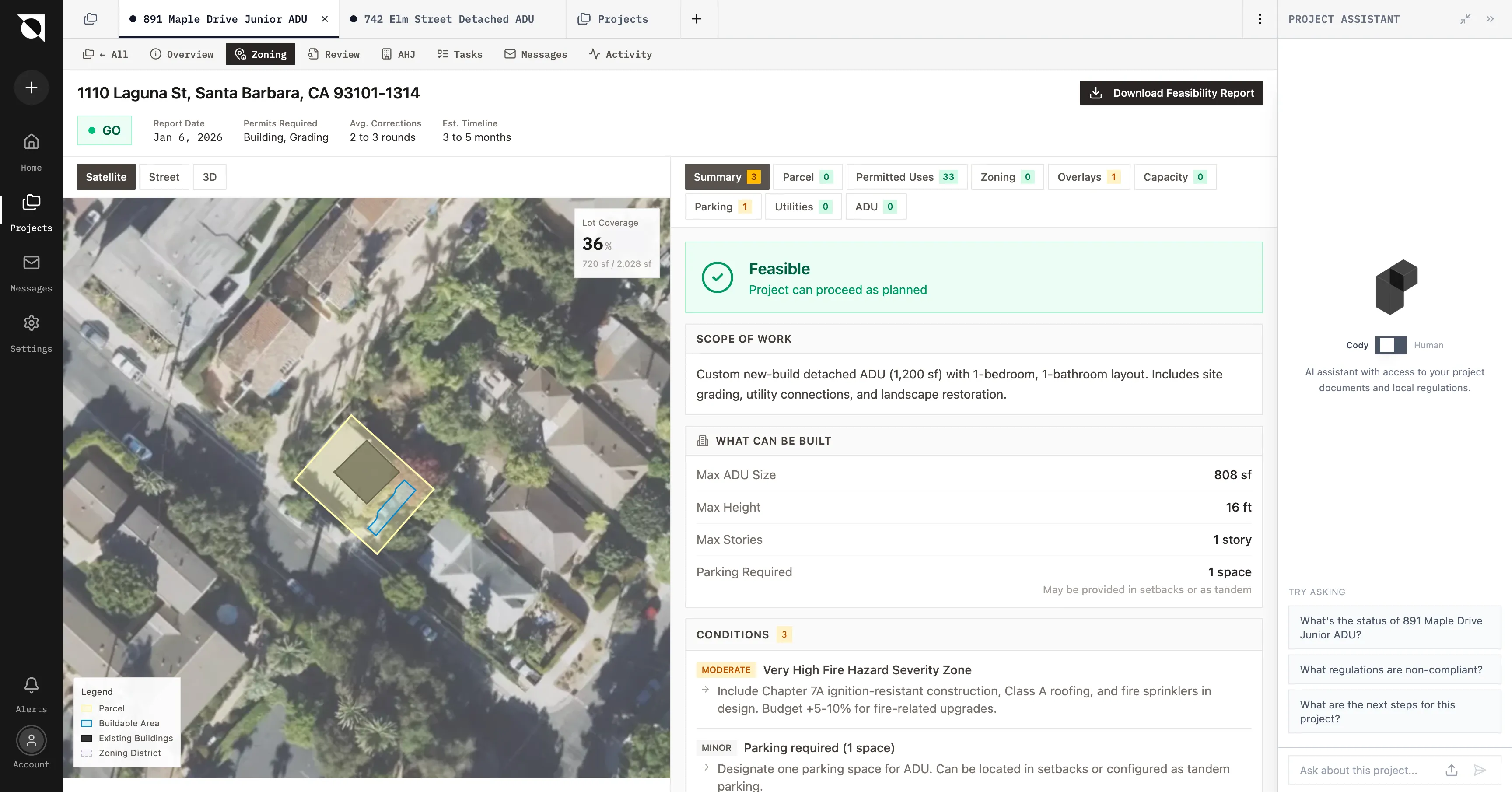
- **Use pre-submission validation tools** to ensure your application doesn't join the 80% that require rework
Calculating Your Real Exposure
To understand your true permit delay exposure, factor in:
- Carrying costs (land payments, financing)
- Locked material pricing that may expire
- Labor availability and committed crew schedules
- Opportunity cost of capital
- Contract penalties for delayed completion
For most projects, the cost of a thorough pre-submission compliance check is a fraction of a percent of what even a single resubmission cycle costs.
The Takeaway
Permit delays are expensive and getting more expensive as construction costs rise. The 80% of applications with deficiencies represent controllable risk. Pre-submission validation tools exist specifically to keep your project out of that majority.
The developers who thrive in the current environment aren't necessarily building faster, they're permitting smarter.